Translate
Wednesday, July 20, 2022
Oaxaca. Ozolotepec
Monday, July 11, 2022
Oaxaca. La Defensa
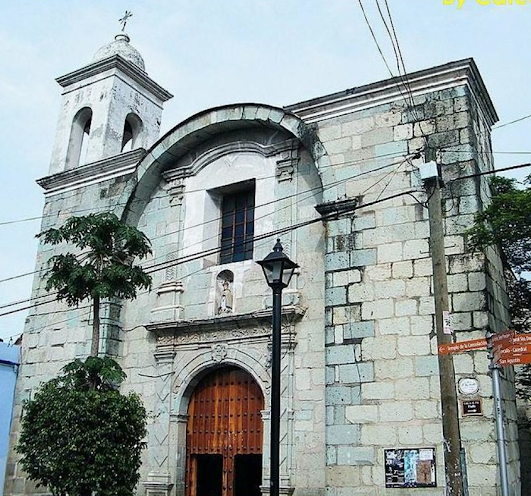
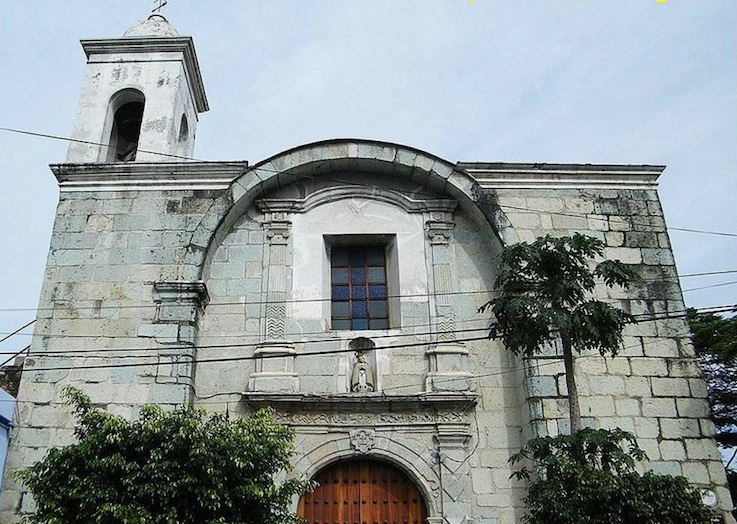
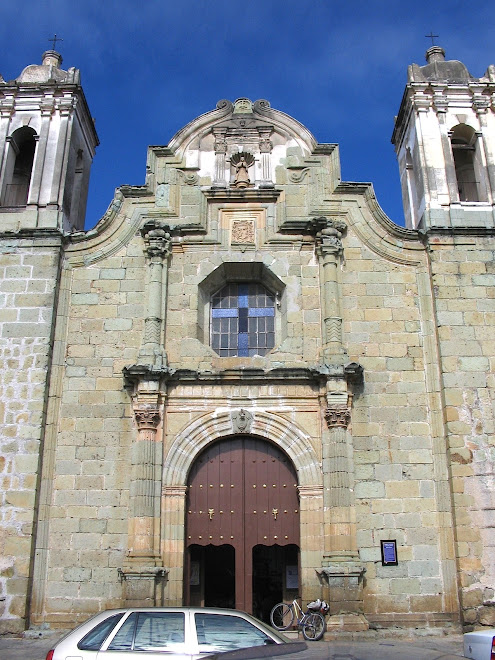
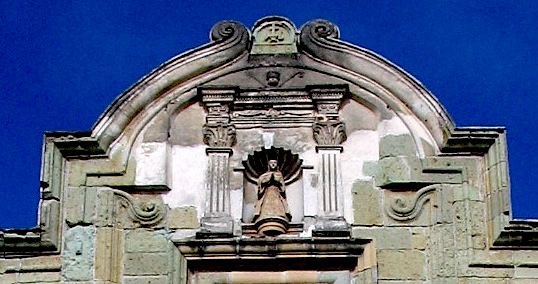
The simple baroque exterior of this little chapel, located close to San Francisco and dedicated to the rarely honored Virgin of La Defensa, is another minor Oaxacan classic.
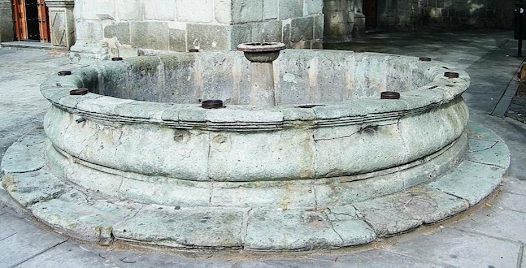
As at Las Nieves, a circular fountain, part of the old city water system, stands in front of the church.
Sunday, July 3, 2022
Oaxaca. Las Nieves
Originally the chapel attached to the Jesuit seminary of San Juan, this gem of a church is now dedicated to Our Lady of the Snows, the popular patron saint of Rome. Founded in the late 16th century, the church suffered repeated earthquake damage, but was rebuilt in the early 1700s and again in the 1770s, after the Jesuits were expelled from Mexico.
Facing east, its typically Oaxacan greenstone facade is surprisingly sophisticated. Fluted Corinthian columns on high pedestals flank the elegant arched doorway, morphing into plain tritostyle columns on either side of the large octagonal choir window overhead.
A striking stepped gable crowns the facade, accented by discreet volutes and outlined by a multi-layered cornice.
A monogram of the Virgin with crossed keys is carved in the keystone of the doorway, a reference to the statue of the Virgin of the Nativity housed in the upper shell niche. The monogram of Christ is emblazoned above the choir window. A nice touch is the fluted molding outlining the entire facade.
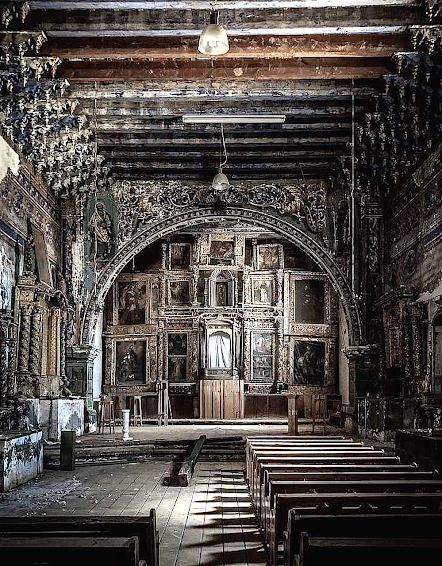
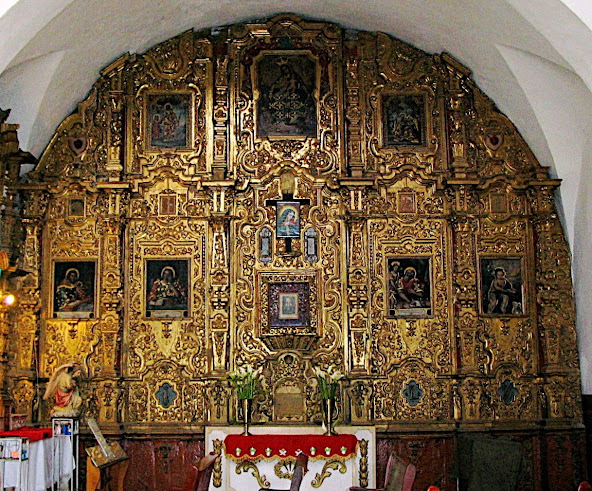
Despite its modest scale, Las Nieves is distinguished by the high quality and variety of its altarpieces. Although the main retablo is designed in the later neoclassical style, the gilded retablos in the transepts and side chapels are refined baroque works, reflecting both the traditional Oaxacan and more cosmopolitan Churrigueresque styles.
Equally impressive is the almost semicircular altarpiece of the Virgin of Perpetual Help in the north transept, dated 1793. Elegant estípite pilasters project against a gilded tapestry of richly worked foliage and strapwork. The paintings glow with gilded accents, with especially luminous effect in the portraits of the Evangelists and the elaborately costumed Virgin at the top of the retablo.
In colonial times, the venerable circular fountain outside the church was the focus of the eastern barrios of the city. Weary water carriers rested their jars in the saucer-like indentations around the rim as they exchanged local news and gossip.
Monday, June 20, 2022
Oaxaca city. Carmen Bajo
While the church of Carmen Alto was restricted to the Spanish residents of Oaxaca, its little known sister church of Carmen Bajo downtown was founded to serve the city’s mestizo and mulatto populations.
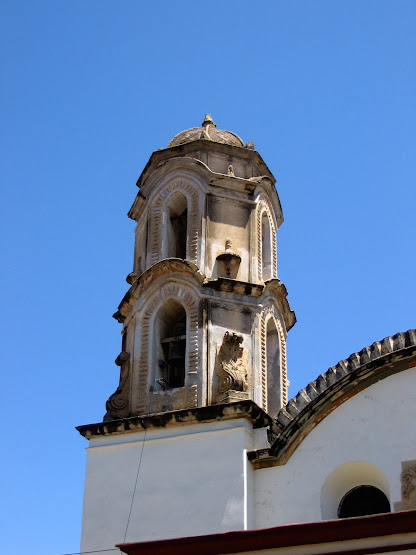
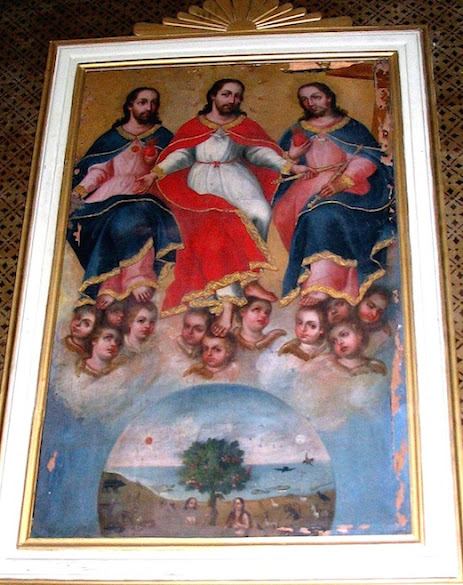
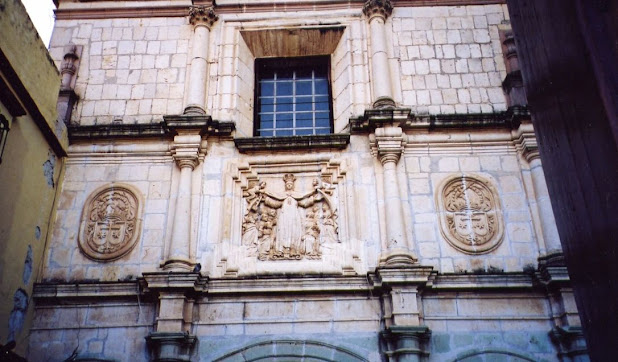
Aside from a pair of reliefs on the facade and its decorative bell tower, today the church offers little of interest apart from an intriguing colonial painting of the Holy Trinity, portrayed Mexican style as three bearded young men seated in gold trimmed robes with their feet resting on angels’ heads.
Thursday, June 9, 2022
Oaxaca City. Carmen Alto
Although much of the large, fortress-like convento has been converted to other uses, including a former prison, the church endures, skirted by an L-shaped, walled atrium with two pedimented gateways bristling with merlons.
In front of the main west entrance to the church stands the best preserved original section: a broad, arcaded portico or narthex—a common feature of Carmelite churches in Mexico.
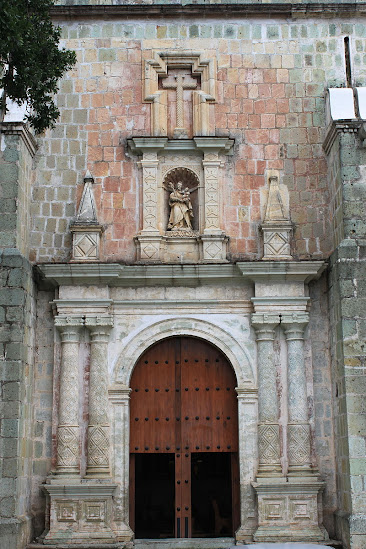
Recessed between deep exterior buttresses, the south entry takes the form of a triumphal arch with double tritostyle columns. A statue of St. Joseph stands in the niche above, flanked by large merlons. A carved cross—known as La Cruz Acordonada because of its cordlike striations—occupies the upper facade, enclosed within a cruciform frame.
Friday, May 27, 2022
Oaxaca. Santo Domingo; the underchoir
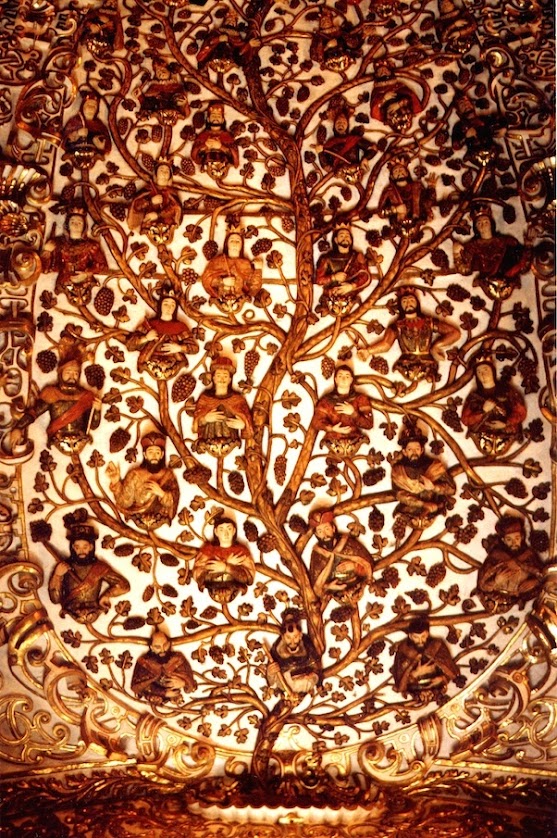
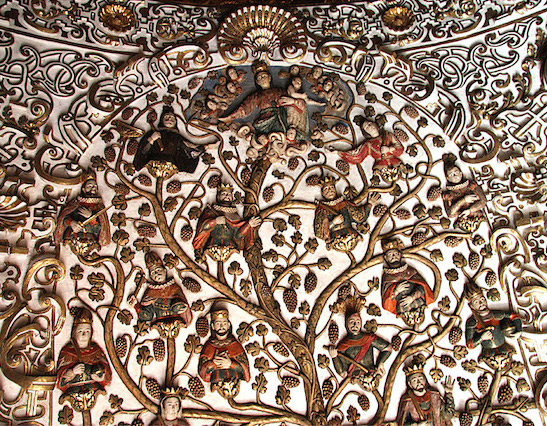
The earliest surviving work of art in the church of Santo Domingo in the city of Oaxaca is the spectacular painted relief of the Genealogy of St. Dominic adorning the under choir (sotocoro).
Based on the medieval motif of the Tree of Jesse, it spreads out across the vault in the form of a multi-branched vine. Springing from the inconspicuous reclining figure of Don Felix de Guzmán, the patriarch of the family, it traces the earthly lineage of the founder of the Dominican Order. Members of his noble family, real and imaginary, emerge like blossoms from buds set among the tendrils and bunches of grapes.
These diminutive, fresh-faced figures exude a charm and directness that establish this ceiling as one of the earliest masterpieces of Mexican popular art. The Virgin Mary relief is a later addition, placed like a Christmas ornament at the top of the tree.
text © 2005/2020 Richard D. Perry
color photography by Felipe Falcón.
Sunday, May 15, 2022
Texcoco. The Third Order chapel
The West Facade.
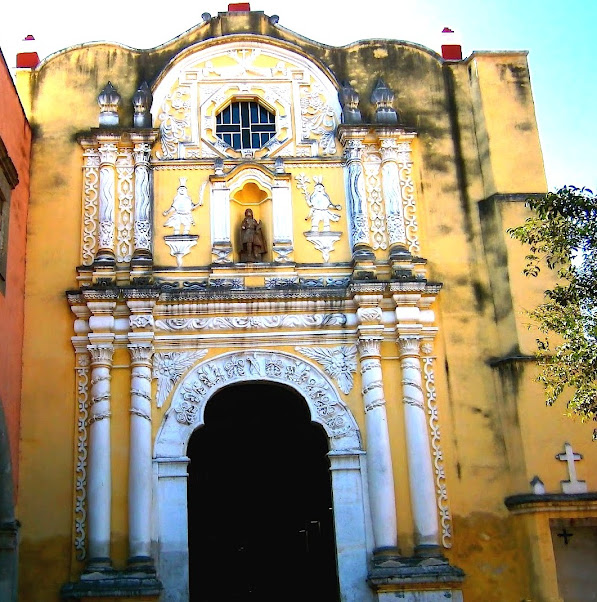
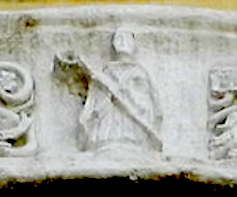
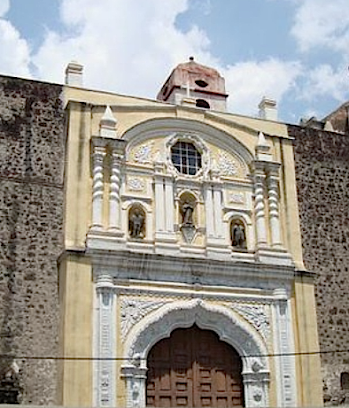
The lobed main doorway is the only remaining element of the 16th century front, framed by spiral wreathed Corinthian columns. Foliated fleur de lis reliefs adorn the archway, whose keystone bears the relief of a bishop, possibly representing San Luis Obispo.
Paired tritostyle columns with wavy fluting — barroco de estrías móviles— flank the upper level, where relief archangels with Indian plumed headdresses stand on corbels to either side of a stone statue of an unidentified figure, thought to portray St. Philip of Jesus, a Franciscan and the first Mexican saint.
The Cathedral entry
The entry is related to the nearby side entry of the cathedral which is more complex, with a lobed, moorish inspired doorway adorned with rosette reliefs and octagonal window. Paired spiral columns and plain pilasters on the upper level flank three sculpture niches occupied by statuary.
The main event here is the sumptuous gilded main altarpiece, fashioned in late baroque estípite style and now dedicated to the Virgin of Guadalupe whose image stands in the center.
There are also retablos in the transepts, one of which on the south side appears somewhat earlier and is notable for relief portraits of rugged apostles on the predella level.